

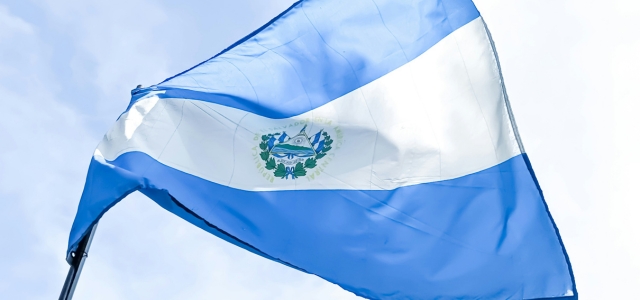
El Salvador has expanded its participation in the international intellectual property system, with three WIPO-administered treaties entering into force in the country today.
The Geneva Act of the Hague Agreement, the Patent Law Treaty (PLT) and the Singapore Treaty on the Law of Trademarks all took effect in El Salvador on October 7, 2026, following the country’s deposit of its instruments of accession on July 7. WIPO’s treaty database confirms October 7 as the entry-into-force date for all three instruments.
The development gives businesses in El Salvador access to additional international frameworks covering industrial designs, patents, and trademarks, while also allowing eligible rights holders from other participating countries to use the relevant systems in relation to El Salvador.
El Salvador joins Hague System
The most significant development for design rights is El Salvador’s accession to the Geneva Act of the Hague Agreement Concerning the International Registration of Industrial Designs.
WIPO said the accession expanded the geographical reach of the Hague System to 100 countries. El Salvador became the 77th Contracting Party to the Geneva Act and the 83rd member of the Hague Union. The Hague System allows applicants to seek international registration of industrial designs in multiple participating jurisdictions through a single international application.
From October 7, eligible applicants in El Salvador can use the Hague System to seek protection in the countries covered by the system, while applicants entitled to use the system can designate El Salvador in an international design application. The accession therefore creates an additional international design-protection mechanism for businesses operating in or expanding into El Salvador.
Patent Law Treaty takes effect
The Patent Law Treaty also entered into force for El Salvador today. WIPO’s treaty records show that El Salvador deposited its instrument of accession on July 7, with the PLT taking effect in the country on October 7. Its accession brings the number of PLT members to 45.
The PLT is designed to harmonize and streamline formal procedures relating to national and regional patent applications. It establishes common requirements and procedures in areas such as the filing of applications and the treatment of certain procedural requirements, while providing measures intended to help applicants avoid losing rights because of particular formal or procedural failures.
For patent applicants, the significance is therefore primarily procedural: the treaty provides a common framework for certain formal aspects of patent practice rather than creating a new international patent right or filing system. El Salvador already participates in the Patent Cooperation Treaty (PCT), having acceded in 2006.
Singapore Treaty adds trademark dimension
The third treaty entering into force today is the Singapore Treaty on the Law of Trademarks. WIPO’s accession notification confirms that El Salvador deposited its instrument on July 7 and that the treaty entered into force for the country on October 7.
The Singapore Treaty establishes a framework for harmonizing administrative procedures relating to trademarks and is designed to apply to a broad range of developments in trademark practice and technology. El Salvador was already a party to the Trademark Law Treaty, having acceded in 2008. The country’s accession to the Singapore Treaty therefore adds another international framework governing trademark registration and administration.
Broader international IP integration
The three accessions give El Salvador a strengthened connection to international IP frameworks covering patents, industrial designs, and trademarks.
WIPO’s current treaty record lists the Geneva Act of the Hague Agreement, Patent Law Treaty, and Singapore Treaty as entering into force for El Salvador on October 7, 2026.
The move also forms part of a wider modernization of El Salvador’s IP system. Speaking at WIPO’s Assemblies in July, an El Salvador government representative said the country had joined the three treaties as part of efforts to modernize its IP system and integrate more fully into the international IP framework.
For patent professionals, the PLT accession is particularly relevant to the formal and procedural requirements surrounding patent applications in El Salvador. For businesses with substantial design portfolios, meanwhile, the Hague accession provides a new route for seeking international design protection in the country.
The Singapore Treaty adds a corresponding international framework for trademark administration.

Written by Elizabeth Jordan
Senior Industry Engagement Manager, CTC Legal Media
You may also like…

UPC gives patent applicants another reason to think carefully about opt-outs
Patent applicants considering whether to opt their European patent applications out of the Unified Patent Court (UPC)...

UKIPO again refuses Emotional Perception AI patent after Supreme Court remittal
The UK Intellectual Property Office (UKIPO) has again refused Emotional Perception AI Limited's patent application for...
Huawei and Qualcomm reset 5G patent relationship with major cross-license deal
Huawei and Qualcomm have agreed to a broad, multi-year patent licensing deal covering 5G, computing, artificial...
Contact us to write for out Newsletter