


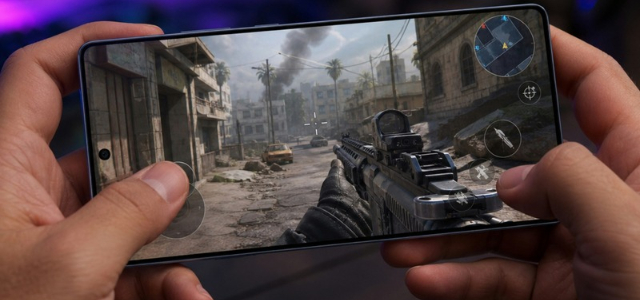
Activision has filed a patent application describing a machine-learning system that could train non-player characters (NPCs) to generate context-sensitive audio responses using real players’ voice conversations, raising questions about the use of player-generated content, voice data, and consent in artificial intelligence development.
The proposed technology would capture players’ spoken reactions to events during multiplayer gaming sessions, correlate the conversations with specific gameplay moments and use the resulting data to train a neural network capable of generating similar responses for computer-controlled characters.
The application, titled Methods and Systems for Applying Machine Learning to Generate Gameplay Audio, was published by the United States Patent and Trademark Office (USPTO) on November 12, 2026, under publication number US 2026/0355629 A1. It names Activision Publishing, Inc. as the applicant and Michael Sanders as the inventor.
How would the technology work?
The proposed system would connect audio recordings from player conversations with identifiable events taking place during a game. These could include kills, deaths, victories, defeats, and other gameplay moments that prompt an immediate reaction. The application describes capturing audio around these events, with one example using a 10-second window before and after a particular occurrence.
The system would then correlate the captured voice data with the relevant gameplay event using timestamps. These paired recordings would be supplied to a neural network for training, allowing it to learn how players typically respond to particular situations.
When a similar event occurs in a subsequent game, the system could generate an appropriate audio response for an NPC. This might include a celebratory remark following a successful elimination, an expression of frustration after a defeat, or a spontaneous verbal reaction to an unexpected development. The application also contemplates using large language models alongside neural networks, with additional information such as player emotions, proximity, game mechanics, and engagement metrics potentially informing the generated responses.
Importantly, the proposal is not simply about reproducing individual players’ voices. Its central focus is learning from human reactions and using those patterns to create more natural-sounding character dialogue. However, the precise characteristics of the generated voices would depend on how the proposed system was implemented.
Third-party voice applications raise further questions
One particularly interesting aspect of the application is its consideration of voice data originating outside the game itself. The specification identifies third-party communication applications, including Discord, TeamSpeak and Ventrilo, as potential sources of audio data. This suggests that the proposed technology would not necessarily be restricted to conversations conducted through a game’s own built-in voice chat system.
The system could therefore draw on conversations between players using separate communication platforms, provided the necessary technical access was available. This raises important questions about how players would be informed that their conversations could be captured and repurposed for AI training.
Voice chat is frequently used for informal conversations between friends, teammates, and other players. Such exchanges may contain personal information, private jokes and comments that were never intended to become part of a commercial AI training dataset.
Although the patent describes technical mechanisms for acquiring and correlating voice data, it does not set out a clear process for obtaining player consent specifically for this proposed use. Players may understand that their communications are subject to moderation or recording policies, but that does not automatically mean they have agreed to their conversations being used to train machine-learning systems for generating in-game dialogue.
The application also proposes filtering mechanisms intended to remove abusive or offensive content before it influences generated audio. However, such safeguards do not resolve the wider questions surrounding the collection, processing and subsequent use of player communications.
Implications for voice rights and user-generated content
The proposal highlights a growing challenge for intellectual property owners and developers seeking to incorporate generative AI into creative products. Although the system focuses on learning from player reactions rather than simply cloning individual voices, it still raises questions about the use of human contributions to create commercially valuable AI-generated material.
There are several potentially distinct issues: whether players have authorized the collection and processing of their voice data; whether their contributions can be used to train commercial AI systems; and whether the resulting audio could raise questions about performers’ rights or other protections where identifiable voices or performances are reproduced.
The legal position would depend on the precise implementation, the jurisdictions involved, and the rights associated with the material being captured. In particular, using a person’s voice as training material does not automatically establish that their voice has been replicated or that their rights have been infringed. The proposal illustrates how AI-generated content can create questions that extend beyond conventional copyright ownership, particularly when the underlying training material consists of everyday communications rather than deliberately created performances.
A patent application, not a confirmed game feature
The November 2026 application is a continuation of an earlier Activision filing submitted on December 27, 2023, which resulted in US Patent No. 12,714,939 being granted on August 25, 2026.
The earlier application and the subsequent continuation should be distinguished: the grant of the original patent does not mean that the November 2026 application has itself been granted. Nor does publication establish that Activision intends to introduce the proposed technology into an existing franchise. The application does not announce a planned implementation in Call of Duty or any other specific game.
Nevertheless, the filing provides an interesting indication of how gaming companies could look to incorporate machine learning into increasingly dynamic and personalized gaming experiences. For the intellectual property sector, it also highlights the questions that arise when AI development relies on material generated by users rather than solely on content created or licensed by developers.
As the boundaries between player communications, creative contributions, and machine-generated content become less distinct, establishing appropriate permissions and protecting individual rights could become increasingly important.

Written by Elizabeth Jordan
Senior Industry Engagement Manager, CTC Legal Media

You may also like…

Madras High Court remits Skillz patent application for fresh examination following claim amendment
The Madras High Court has directed the Indian Patent Office to reconsider a patent application filed by Skillz...

BIP Asia Forum and Entrepreneur Day open today
Advancing innovation and global expansion November 19, 2026 – The 16th Business of IP Asia Forum (BIP Asia Forum),...

UPC confronts alleged abuse of divisional patent applications in Sandoz v. Novo Nordisk
The Unified Patent Court (UPC) has confirmed that it can take measures to prevent patent proprietors from using...
Contact us to write for out Newsletter